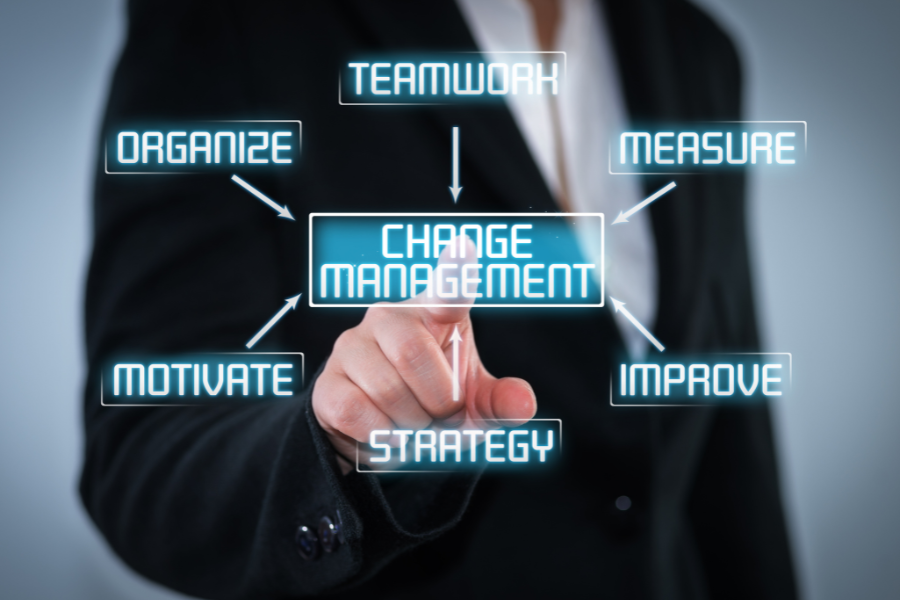
Change in business is no longer a once-in-a-decade event—it’s constant, rapid, and unavoidable. Whether it’s adopting new technology, restructuring teams, or reinventing your company culture, the way you manage the people side of change can make the difference between a smooth transformation and an organizational train wreck.
In my work helping companies navigate complex transitions, one truth has emerged again and again: successful change management isn’t about forcing change—it’s about guiding people through it.
Why Change Management Matters More Than Ever
Modern organizations operate in environments of rapid innovation, evolving customer expectations, and constant disruption. But here’s the catch—while processes and technology can pivot instantly, people can’t.
Employees need:
- Clarity on why change is happening.
- Support in learning and adapting.
- Confidence that the change benefits both the company and them personally.
Without these, even the most promising strategic initiatives risk failure. Studies consistently show that most change initiatives fail—not because the strategy is wrong, but because employees resist or disengage.
The Core Pillars of Effective Change Management
We understand that in the real world, change initiatives often run under tight timelines and with stretched budgets. That’s why a change plan must be flexible, focusing first on the actions that deliver the greatest impact fastest.
Even when resources are limited, protecting the human side of change is non-negotiable — and it can be done by concentrating on a few core pillars:
1. Strategic Communication: More Than Just Announcements
The single biggest mistake leaders make is underestimating how much—and how often—they need to communicate. Change requires clear, consistent, and transparent messaging:
- What’s changing and why.
- How it will impact each role.
- What support will be provided.
Communication must also be two-way. Listening to employee concerns isn’t just polite—it’s strategic, as it surfaces barriers and builds trust.
2. Leadership Alignment & Sponsorship
If leaders aren’t aligned, employees notice. Visible, united leadership is a non-negotiable. Leaders must not only endorse the change but actively model the new behaviors and mindset. In HR-led initiatives, equipping managers with the tools and confidence to guide their teams is critical.
3. Employee Involvement & Ownership
Top-down directives create resistance. Involving employees early—through workshops, pilot programs, and advisory groups—turns potential skeptics into change champions. The more people feel part of the change, the less they feel it’s being done to them.
4. Capability Building
Change often demands new skills or ways of working. Training should be practical, accessible, and paced for learning retention. From technical upskilling to mindset shifts, investing in capability building ensures employees don’t just survive the change—they thrive in it.
5. Measurable Progress & Feedback Loops
You can’t manage what you don’t measure. Track adoption rates, engagement levels, and performance metrics. Pair this with regular feedback opportunities so you can quickly adjust course if something isn’t working.
The Best Way to Handle Change: A Human-Centered Approach
While every change initiative is unique, there’s one principle that consistently delivers results: put people at the heart of the process.
This means:
- Recognizing that change is emotional, not just operational.
- Giving people time and space to adjust to the new reality.
- Celebrating small wins along the way to maintain momentum.
In practical terms, a human-centered approach balances the business case for change with the personal journey of each employee. When people feel informed, supported, and valued, resistance drops and adoption skyrockets.
A Proven Path Forward
If you’re preparing for significant change in your organization, here’s the high-level roadmap we recommend:
- Diagnose Readiness – Assess culture, morale, and potential points of resistance before making your first move.
- Design the Change Strategy – Align leadership, create a communication plan, and identify change champions.
- Deliver With Support – Roll out the change in stages where possible, providing training and resources at every step.
- Reinforce & Sustain – Recognize successes, gather feedback, and integrate the change into daily operations until it becomes “the way we work.”
Change is inevitable. Struggle is optional. When managed with intention, empathy, and a clear plan, organizational change can strengthen culture, boost performance, and future-proof your company.
The companies that thrive through change are those that understand: it’s not just about systems—it’s about people. And when your people are on board, transformation becomes not just possible, but powerful.
At Teamentum, our philosophy is simple: change management isn’t about telling people what’s coming — it’s about bringing them with you.